EU Close Digest - 29 Oct 2026
AI-generated close market digest from curated financial newsflow.
The Treasury’s $402 bn of new short‑term bills is pressuring money‑market rates upward.
US Session Open & European Close
European equity markets closed in the green, with the Euro Stoxx 50 up 0.73% at 6,213, the DAX gaining 1.46% to 26,078 and the FTSE 100 rising 0.32% to 10,729. By contrast, the US opened lower; the S&P 500 was trading around 7,713, down 0.40%, and the Nasdaq 100 slipped 1.41% to about 29,392. The tech sector led the decline after Alphabet and Microsoft reported earnings that missed AI‑related capex expectations, while ServiceNow fell 25% on its own results, dragging the broader Nasdaq. Energy lagged as Brent crude fell 1.5% to $109.96, but the VIX eased 3.2% to 16.37, indicating reduced volatility despite the equity weakness. The divergence reflects Europe’s “hawkish pause” after the ECB left rates unchanged, while US investors digested weaker‑than‑expected AI spending signals and the Treasury’s aggressive short‑term debt rollout.
Analyst Consensus
- Short‑term Treasury supply shock: TreasuryDirect announced four new bills—$115 bn (4‑week), $110 bn (8‑week), $95 bn (13‑week) and $82 bn (26‑week)—totaling $402 bn of cash‑equivalent debt to be issued between 3 Nov and 5 Nov. Bloomberg notes that the oversized 8‑week tranche suggests an acute financing need that could outstrip demand, potentially nudging short‑term yields higher. Both sources agree the clustering of issue dates will compress the cash‑flow calendar, forcing money‑market funds and corporate treasurers to rebalance quickly, which should lift the 1‑month and 3‑month Treasury bill rates.
- ECB policy outlook: Bloomberg reports that ECB officials are prepared to raise rates in December if inflation does not improve, while CNBC cites the ECB’s “hawkish pause” with a 67% market‑priced probability of a December hike, up from earlier expectations. The two viewpoints converge on the likelihood of tighter policy, but differ on the immediacy: Bloomberg emphasizes a readiness to act, whereas CNBC highlights the current hold and the market’s pricing of a future move. Together they signal that euro‑area yields may rise further and the euro could strengthen modestly.
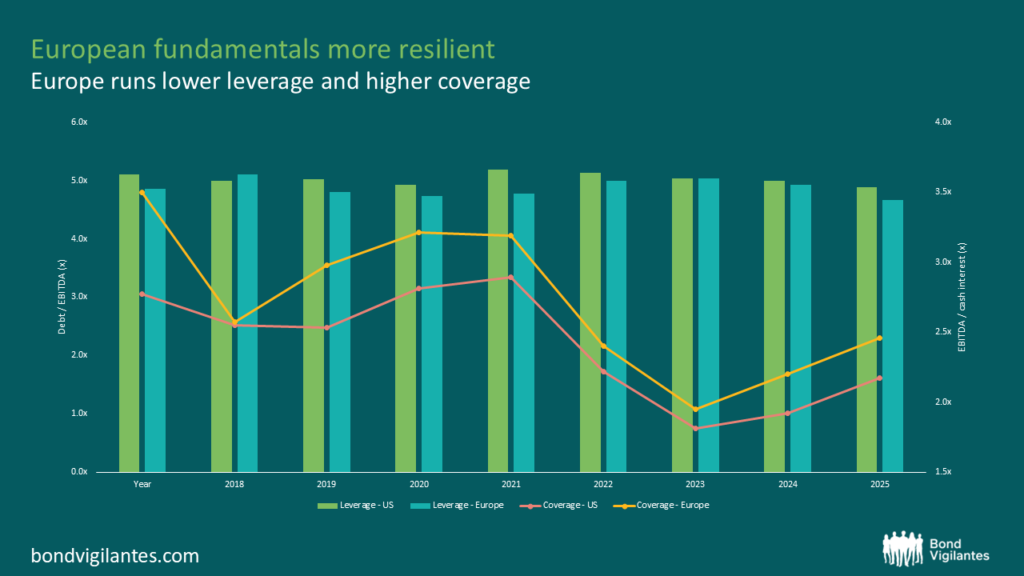
- Cross‑asset credit dynamics: High‑yield spreads (HYG) slipped 0.10% to 77.51 and investment‑grade bonds (LQD) were flat at 104.04, while emerging‑market debt (EMB) rose 0.40% to 92.15. The Bond Vigilantes note that European private‑credit fundamentals remain resilient, offering lower default risk than US counterparts. The combination of a steepening US Treasury curve from the short‑term bill issuance and stable European credit conditions suggests a modest rotation into higher‑yielding, short‑duration assets, with EM debt benefitting from a relative yield advantage.
- AI‑related equity risk: CNBC highlighted Alphabet’s 13% post‑earnings drop and ServiceNow’s 25% plunge, both tied to concerns that AI spending may be weaker than projected. Steve Eisman warned that an AI crash would be “impossible” to avoid, urging a more defensive stance. In contrast, Stanley Druckenmiller’s backing of crypto‑style derivatives (tradeXYZ) signals a willingness to embrace high‑beta, AI‑adjacent risk. The divergence underscores a split view: some investors see AI as a near‑term earnings drag, while others are betting on new derivative structures to capture upside from the same theme.
- Mexico’s regional growth split: INEGI’s state‑level data for Q2 2026 showed San Luis Potosí, Veracruz and Jalisco posting the strongest quarterly gains, while Zacatecas lagged with only 2.5% growth. The analysis suggests that firms with exposure to the high‑growth states—particularly automotive plants in Jalisco, oil‑service firms in Veracruz and logistics hubs in San Luis Potosí—could see earnings upside, whereas mining companies tied to Zacatecas may face margin pressure. Investors are advised to tilt toward sector‑specific Mexican ETFs that overweight the leading states and to monitor state‑level activity as a leading indicator for upcoming corporate earnings.
Next Session Setup
The Asia‑Pacific markets will open with the Japanese Nikkei 225 up 1.10% at 64,659 and the Hang Seng down 0.59% at 22,959, reflecting mixed sentiment after the US tech sell‑off. Key data on the horizon include the Japan Ministry of Finance’s announcement of a 10‑year JGB issuance in November, which could add supply pressure to the YCC‑controlled curve just ahead of the BOJ’s semi‑annual Yield Curve Control review in early December. No consensus level is identified for the upcoming BOJ decision, but any move to tighten YCC would likely lift longer‑dated JGB yields and affect carry‑trade dynamics. In Korea, Statistics Korea’s holiday‑driven population swings suggest short‑term volatility for travel‑related equities, while the Bank of Korea’s recent deposit and loan rate hikes (deposit rates now 3.45% and loan rates 4.57%) may weigh on domestic credit growth. The US market will watch the release of the Treasury’s short‑term bill auction results later today; a weak bid‑to‑cover could push the 1‑month bill rate above the current market expectation of roughly 5.0%. The most pressing question heading into the next session is whether the BOJ will adjust its Yield Curve Control policy in response to the upcoming 10‑year JGB issuance.
