EU Midday Digest - 29 Oct 2026
AI-generated midday market digest from curated financial newsflow.
Oil prices slipped to $110 per barrel as Iran diplomacy eases geopolitical risk.
Asia-Pacific & European Session
In Asian trading, the Nikkei 225 rose 1.10% to 64,659, buoyed by Samsung Electronics’ record Q3 operating profit of about 107 trillion won, even as its shares fell on a delayed shareholder‑return plan. Oil eased after U.S. Vice‑President JD Vance’s outreach to Iran, pulling Brent down 1.30% to $110.19, which supported risk‑off sentiment in the region. European markets opened higher, with the Euro Stoxx 50 up 0.43% to 6,194, the DAX gaining 1.08% to 25,982 and the FTSE 100 rising 0.48% to 10,746, as investors priced in an ECB hold on rates and the pending resignation of President Christine Lagarde. The dollar slipped modestly, with EUR/USD at 1.1130 and GBP/USD at 1.3306, while the yen firmed to 157.99 per dollar, reflecting the mixed rate outlook across the Atlantic. Divergence emerged as Asian equities were driven by corporate earnings and commodity news, whereas European indices responded more to central‑bank expectations and geopolitical developments.
Key Themes
- Energy earnings and geopolitical supply shock: Shell, TotalEnergies and Repsol announced expanded buy‑back programmes after third‑quarter earnings surged on soaring refining margins, a direct result of the Iran‑war‑driven supply crunch. Oil prices, however, retreated to $110.19 a barrel as tentative diplomatic outreach reduced the risk premium (Bloomberg). The combination of strong cash generation and a modest price pull‑back suggests energy stocks may retain upside, but any de‑escalation could cap further margin expansion. Investors might stay long on majors while monitoring oil’s $112 resistance for a potential rally trigger. (Financial Times, Bloomberg)
- US tech earnings and AI‑spending caution: Alphabet’s shares plunged 10% in pre‑market trading after reporting a larger‑than‑expected negative free‑cash‑flow, despite maintaining its full‑year spending guidance (CNBC). Simultaneously, Microsoft and other AI‑focused firms missed cap‑ex expectations, prompting Nasdaq futures to fall (Bloomberg). The disappointment has revived concerns that AI‑driven capital spending may be more constrained, pressuring high‑beta tech names. A short‑term rotation toward defensive or value‑oriented sectors appears likely, with the Nasdaq 100’s 29,813 level serving as a near‑term barometer. (Financial Times, Bloomberg, CNBC)
- Monetary‑policy outlook across major central banks: Fed Chair Warsh signaled a continued bias toward higher rates, yet left flexibility, keeping the market’s probability of a 25‑bp December hike at roughly 84% (InvestingLive). The ECB is expected to hold rates amid French bond‑market stress and rising energy costs, while the RBA is priced for a fifth hike to 4.85% and the RBNZ sees a high likelihood of a December move (InvestingLive). Lagarde’s announced February 2027 departure adds policy‑direction uncertainty in the euro area. The divergent rate trajectories suggest short‑duration U.S. Treasuries and Euro‑area sovereigns may offer relative value, while rate‑sensitive equities face headwinds. (InvestingLive, Bloomberg, CNBC)
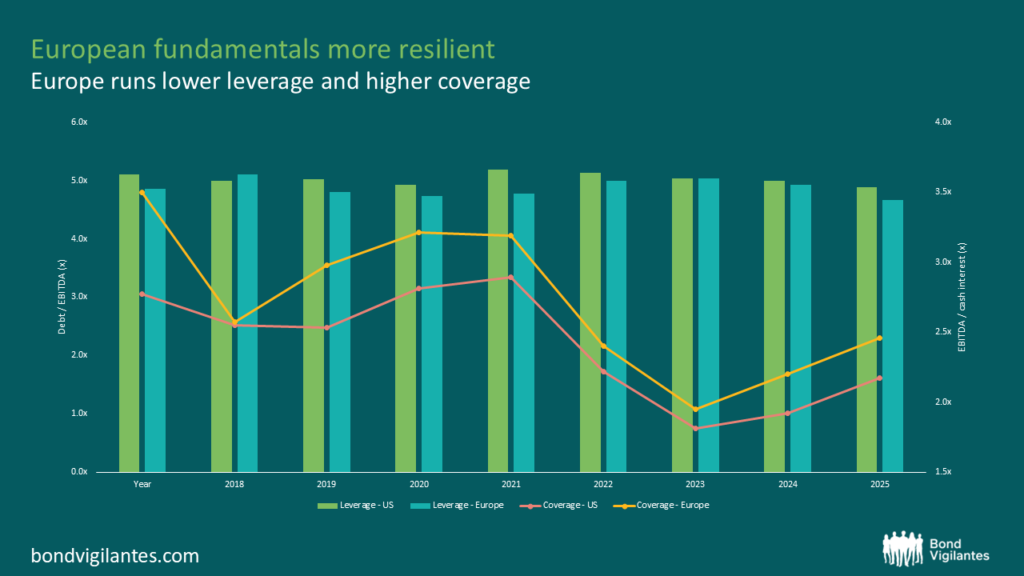
- European private credit and infrastructure debt appeal: Bond Vigilantes highlighted that European direct‑lending markets exhibit lower default rates, stricter underwriting and higher equity cushions than their U.S. counterparts, making them comparatively lower‑risk. Infrastructure debt, backed by inflation‑linked cash flows and long‑term contracts, is positioned as an attractive source of stable, real‑return income (Bond Vigilantes). In a low‑growth, high‑inflation environment, allocating to these assets could enhance portfolio resilience, especially as traditional credit spreads tighten. (Bond Vigilantes)
- Tokenised collateral in UK central clearing: The Bank of England launched a consultation to permit central counterparties to accept tokenised forms of eligible collateral, signalling regulatory openness to digital assets in core market infrastructure. If formal guidance follows, banks will need to adapt collateral‑management systems and risk frameworks, creating both operational challenges and opportunities for fintech firms offering tokenisation solutions. The move could broaden the collateral pool, improve liquidity in clearing, and accelerate digital‑asset integration in the UK financial system. (Bank of England)
13F Filings
Temasek Holdings filed a 2026Q3 13F covering US$ 36 bn across 179 positions. To date, four of the 115 tracked funds have submitted filings. Notable portfolio moves include net buying of APH (one new, one added), TJX (one new, one added), AMZN (three additions) and SPGI (two additions). Net selling was observed in V (three trims), MA (two trims), DASH (one exit, one trim) and AMAT (one exit, one trim). These holdings reflect positions as of quarter‑end and do not indicate current trading activity.
What to Watch
Key macro releases include the U.S. PCE inflation report, expected to show headline +0.5% m/m (3.6% y/y) and core +0.3% m/m (3.1% y/y), which will test the Fed’s December hike odds of roughly 84% (InvestingLive). The ECB’s policy decision later today will confirm whether rates stay on hold amid French bond‑market turbulence. In earnings, Merck beat estimates and raised its profit outlook on strong Keytruda sales (CNBC), while Shell posted its highest quarterly profit since 2022, supporting energy‑sector optimism (Investing.com). Watch the 2‑year Treasury yield at 4.67% – a break below 4.45% remains unlikely per market odds – and the EUR/USD at 1.1130, where a sustained move above 1.1150 could signal euro strength. Brent’s $110.19 level and the US 10‑year yield at 5.05% are also pivotal; a breach above $112 or 5.10% respectively would reinforce bullish oil sentiment and higher‑rate expectations. The market’s central question: will the Fed proceed with a December rate hike despite mixed inflation data and growing concerns over AI‑spending constraints?
