EU Midday Digest - 28 Oct 2026
AI-generated midday market digest from curated financial newsflow.
Fed pause consensus at 93% clashes with $219bn Treasury bill supply and UK Budget fiscal test today.
Overnight & European Session
Asian markets diverged sharply: the Nikkei 225 rose 1.08% to 63,954 and the Kospi surged 7% to a fresh high after SK Hynix earnings signaled persistent memory-chip supply constraints through 2030, while the Hang Seng edged up 0.23% to 23,095 amid lingering doubts over China’s AI profitability. European indices opened modestly lower, with the Euro Stoxx 50 down 0.26% to 6,149, the FTSE 100 off 0.34% to 10,650 and the DAX flat at 25,572. Brent crude climbed 1.76% to $111.34 as the Iran conflict’s reported $47bn cost (per The Hill via CNBC) and Unilever’s warning of price hikes kept a geopolitical risk premium in oil. The dollar index held at 102.38, while the euro traded at 1.1174 (Friday close) and sterling at 1.3345, both stale ahead of the UK Budget and Fed decision.
Key Themes Today
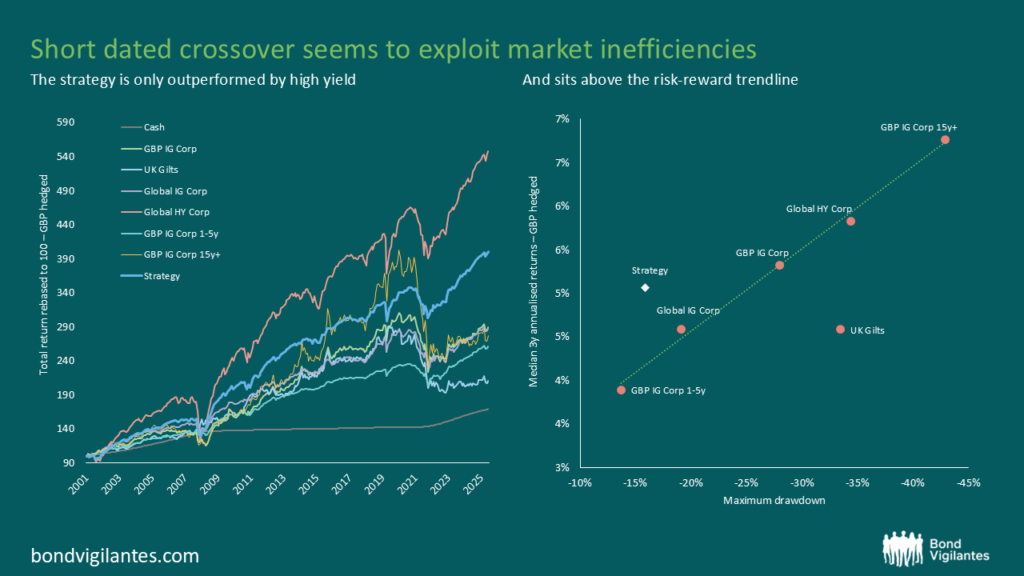
- Fed Policy & Treasury Supply: The CNBC Fed Survey shows 93% of respondents expect a pause at this week’s meeting, yet Bloomberg warns that bullish Treasury positions are vulnerable to a sharp reversal if the Fed strikes a hawkish tone. Simultaneously, TreasuryDirect confirms $219bn of new bill supply hitting the market this week — $95bn 6-week, $54bn 52-week and $75bn 17-week bills — with back-to-back auctions on 27-28 October compressing the absorption window. The combination of a priced-in pause and massive front-end issuance could pressure short-term yields higher even if the policy rate is unchanged, a dynamic Bond Vigilantes notes favors short-dated crossover strategies that benefit from rolldown income. Attribution: CNBC, Bloomberg Economics, TreasuryDirect, Bond Vigilantes.
- UK Budget & Gilt Resilience: InvestingLive reports the first Budget under Prime Minister Andy Burnham is expected to introduce targeted tax increases and cost-of-living support with fiscal headroom estimated at £15-16bn. Bloomberg Economics notes bond traders are betting on UK assets’ resilience, viewing the Budget as a test of investor confidence. A credible fiscal plan could support the pound and push gilt yields lower as fiscal risks ease, but any slippage in the headroom figure would likely trigger a repricing of UK sovereign risk. The FTSE 100’s modest decline suggests equity markets are cautious ahead of the announcement. Attribution: InvestingLive, Bloomberg Economics.
- AI Earnings & Credit Capacity: Microsoft and Alphabet report after the US close today, followed by Amazon, Intel and others Thursday, in a week Bloomberg describes as the “busiest stretch” for AI-related earnings. SK Hynix’s results underscored that memory-chip supply constraints will persist through 2030, a view MarketWatch says Wall Street considers critical for the AI hardware chain. Yet Bloomberg Markets separately warns that credit markets are approaching the absorption ceiling for AI data-center and chip financing, implying funding costs for AI projects could rise. The tension between robust demand visibility and tightening credit capacity will frame post-earnings positioning across tech and high-yield credit. Attribution: Bloomberg Markets, MarketWatch, Earnings Calendar.
- Geopolitical Cost Transmission: The Iran conflict’s escalating cost — $47bn according to The Hill cited by CNBC — is feeding directly into corporate pricing. Investing.com reports Unilever is flagging price hikes as “Iran war costs stack up,” illustrating how Middle East conflict transmits into global FMCG margins. Brent at $111.34 reflects this risk premium. Separately, InvestingLive highlights Germany’s projected record Asia-Pacific trade deficit of nearly €146bn in 2026, with auto exports to China down over 30% in the first seven months, signaling structural demand weakness that could weigh on the euro and European industrial earnings. Attribution: CNBC, Investing.com, InvestingLive.
- Israeli Political Divergence: Two sources present contradictory pictures of Israeli assets. CNBC reports Israeli bonds and the shekel fell after exit polls showed Netanyahu’s alliance and the opposition both far short of a governing majority, raising the risk of political deadlock and a higher sovereign risk premium. By contrast, FirstFT cites recent poll data showing Netanyahu’s Likud bloc commanding approximately 48% of the vote — a 6-point swing — with coalition talks yielding agreements on a 3-year budget framework, and Bloomberg’s sovereign-spread tracker showing Israel’s 10-year OAT-Israel spread tightening from 115bps to 78bps over two weeks. The divergence likely reflects different polling snapshots and the distinction between immediate post-election reaction and medium-term policy certainty pricing. Attribution: CNBC, FirstFT.
What to Watch
The Federal Reserve announces its rate decision at 18:00 GMT with the policy rate expected to hold at 3.75-4.00%; markets price an 80% chance of a December hike, so Chair Warsh’s forward guidance on the pace of tightening will drive the dollar and Treasury yields — watch for any shift in the dot-plot language. The UK Budget at 12:30 GMT will be scrutinized for the £15-16bn headroom figure and any changes to capital gains or inheritance tax; a credible plan could push 10-year gilt yields below 4.50% and lift GBP/USD above 1.34. The Bank of Canada is forecast to hike 25bps to 2.50% at 14:45 GMT despite trimmed-mean CPI at 1.8% y/y; a hold would likely trigger a sharp CAD sell-off. Microsoft and Alphabet earnings after the US close will test whether AI capex intensity is translating into cloud revenue acceleration; any miss on Azure or Google Cloud growth could reverse the Nasdaq 100’s 1.29% gain from Friday. Finally, Qatari mediators presented Iran with a new draft deal with a response expected by week-end; a credible agreement would likely spark a sharp crude sell-off and risk-on rally, but the market is already “extrapolating good news” per InvestingLive, making the reaction asymmetric. Open question: Will the Fed’s guidance validate the 93% pause consensus or reopen the door to a November hike, and can the Treasury absorb $219bn of bills without a front-end yield spike?
