EU Midday Digest - 26 Oct 2026
AI-generated midday market digest from curated financial newsflow.
Brent crude slipped to US$ 110.0 a barrel as Middle‑East diplomatic overtures eased the oil risk premium.
Overnight & European Session
Asian markets closed lower on heightened AI‑related credit concerns, while Europe opened with modest gains on the Euro Stoxx 50 (+0.5%) and the DAX (+0.9%). The euro steadied at 1.1217 against the dollar, and the dollar index edged up to 101.87 as the Fed’s upcoming policy decision remained priced in at a 91% probability of a hold. U.S. Treasury yields held near the October 23 close (2‑year 4.69%, 10‑year 5.00%, 30‑year 5.33%). The VIX ticked higher to 19.53, reflecting lingering equity‑market nervousness after Meta’s massive equity raise and widening tech credit spreads. The divergence between Asia’s risk‑off tilt and Europe’s risk‑on bias stems from contrasting reactions to AI‑infrastructure funding stress versus a softer oil backdrop in the euro area.
Key Themes Today
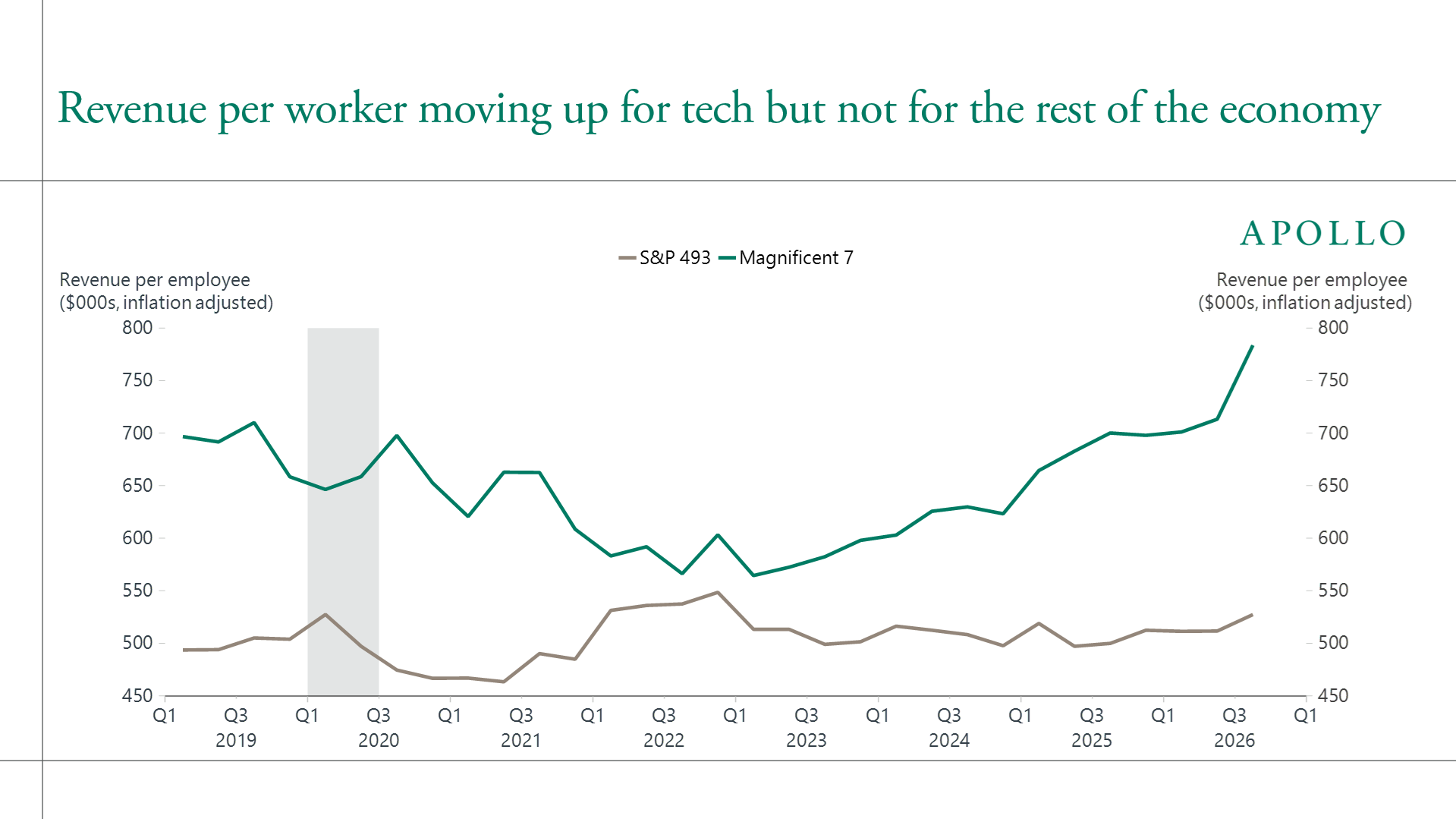
- AI compute bottleneck: Zack Eiseman notes that the AI‑infrastructure build‑out has moved from a financing constraint to a physical‑supply choke point, with 146 U.S. data‑center projects delayed or cancelled and HBM4 volume now pushed to 2028 despite a ₩110 trn investment. Nvidia’s “Rubin Ultra” design already mixes HBM4/HBM4E to hedge yield and thermal risk, while hyperscalers such as Microsoft and Amazon are the only players likely to secure coherent capacity. The implication is that investors should favor vertically integrated or hyperscaler‑backed compute providers and treat pure‑play neocloud operators as high‑risk credit candidates. (Source: Zack Eiseman – ICYMI Overnight)
- Monetary‑policy divergence: Global central banks are pulling in opposite directions. Goldman Sachs’ multi‑asset CIO warns that the Fed’s “excessively aggressive” hiking path could break the economy, while Bloomberg Economics reports the BoE is priced for a November 5 hike to 4% and three further moves by July, its most hawkish stance since early 2023. The ECB faces a rising “hike hurdle” as French spreads tighten, with Oxford Economics suggesting a higher policy bar. A dovish Fed pivot would steepen the curve and pressure the dollar, whereas BoE over‑tightening could deepen the UK housing correction and widen gilt spreads as the DMO loads the front end with £11 bn of T‑bills. (Source: Zack Eiseman – ICYMI Overnight; Bloomberg; Goldman Sachs)
- Credit spreads and household equity exposure: Off‑The‑Charts reports that Meta’s 5‑year CDS widened by 8.9 bps to roughly 119.3 bps, its highest level in a year, as the market digests a US$ 35 bn equity raise and a planned US$ 60 bn at‑the‑market program for AI spending. Simultaneously, Social Capital data show U.S. households now hold equities at 48.2% of their financial assets, up from 38.7% at the dot‑com peak, creating a feedback loop where equity drawdowns could directly dent consumer spending. The widening tech credit spreads and elevated household equity concentration suggest a near‑term risk of a “credit‑equity contagion” that could amplify market volatility if AI capex fails to deliver returns. (Source: Off‑The‑Charts; Meta equity offering – Nasdaq)
- Geopolitical risk re‑pricing in oil and sovereign credit: CNN and the WSJ note a high‑probability 96‑hour launch window for Iran‑Israel‑U.S. conflict, while Houthi attacks on Saudi energy arteries have raised the effective risk premium on Middle‑East barrels. Brent’s retreat to US$ 110.0 reflects a temporary easing of that premium as diplomatic overtures gain traction, but the underlying risk remains, with Saudi oil‑budget assumptions pegged at US$ 130 /bbl. Bloomberg highlights Brazil’s sovereign‑bond tumble in London after Lula’s surprise election win, underscoring how regional political shocks can instantly reprice sovereign credit. The combined oil‑risk and sovereign‑credit dynamics imply that any escalation could quickly reverse the recent oil decline and widen emerging‑market spreads. (Source: CNN; WSJ; Bloomberg – Brazil markets; CoinDesk – Brent slide)
What to Watch
Key intraday catalysts include the Federal Reserve’s October 26 meeting – markets are pricing a 91% chance of a hold, but Yardeni Research warns that a surprise rate hike or a 50‑bp tightening could open a buying window for equities. The BoE’s November 5 decision will be closely watched; a move above the market‑priced 4% would steepen the gilt curve and test the £11 bn T‑bill issuance plan. Earnings to monitor are Verizon (VZ) before the U.S. open, which could move the telecom sector after its subscriber‑growth surprise, and Cadence Design Systems (CDNS) after the close, given its exposure to AI‑related semiconductor design spend. On the commodity side, Brent’s next move past US$ 112 or below US$ 108 will signal whether geopolitical risk is re‑priced. Finally, the market’s focus remains on whether the Fed’s communication on inflation versus growth risk will stay dovish or tilt hawkish, a decision that could reshape the USD, Treasury yields, and risk‑asset valuations.
