EU Midday Digest - 23 Oct 2026
AI-generated midday market digest from curated financial newsflow.
Brent crude rose to $109.92 per barrel, driven by Iran’s war‑readiness warnings.
Overnight & European Session
Asian equity markets slipped as a broad chip sell‑off spread, while European indices opened lower on the back‑stop of rising energy prices and mixed macro data. The Euro Stoxx 50 was down 0.77% at 6,040, the DAX fell 0.95% to 25,130 and the FTSE 100 slipped 0.61% to 10,660. In FX, the euro weakened to 1.1204 USD (‑0.27%) and the pound to 1.3382 USD (‑0.11%), while the yen fell to 156.92 per dollar (‑0.77%). U.S. Treasury yields retreated, with the 2‑year at 4.65% (‑16 bp) and the 10‑year at 4.96% (‑17 bp). The pull‑back in yields reflects renewed safe‑haven demand after the oil rally and the absence of fresh U.S. data, contrasting with the still‑elevated risk appetite that kept Asian tech stocks under pressure.
Key Themes Today
- Oil‑price shock and geopolitical risk: Brent’s climb to $109.92 per barrel and U.S. crude staying above $100 were sparked by Iran’s public statement that it is “prepared for warfare,” a warning that revived concerns over supply disruptions in the Middle East. The price jump adds a fresh upward bias to global inflation expectations, especially for energy‑intensive economies. With diesel margins already tight, the higher oil price could sustain the current 95%+ U.S. refinery utilization reported by the EIA. Investors may tilt toward energy equities and inflation‑linked assets while monitoring any escalation that could force central banks to reconsider policy tightening. (Source: CNBC)
- Eurozone PMI divergence – UK strength versus French weakness: The UK flash composite PMI surged to 53.1, its highest since February, driven by services at 53.1 and manufacturing at 52.8, and new‑order growth at a 25‑month high. By contrast, France’s composite PMI fell to 48.4, slipping back into contraction and marking the sharpest demand drop since May. The split underscores uneven recovery across the euro area, with the UK likely to see another Bank of England rate hike (per InvestingLive) while the ECB faces a tougher decision as French data drags overall euro‑zone sentiment. The GBP’s recent 0.27% fall against the euro reflects this divergence, suggesting a potential re‑rating of the EUR/GBP pair if French weakness persists.
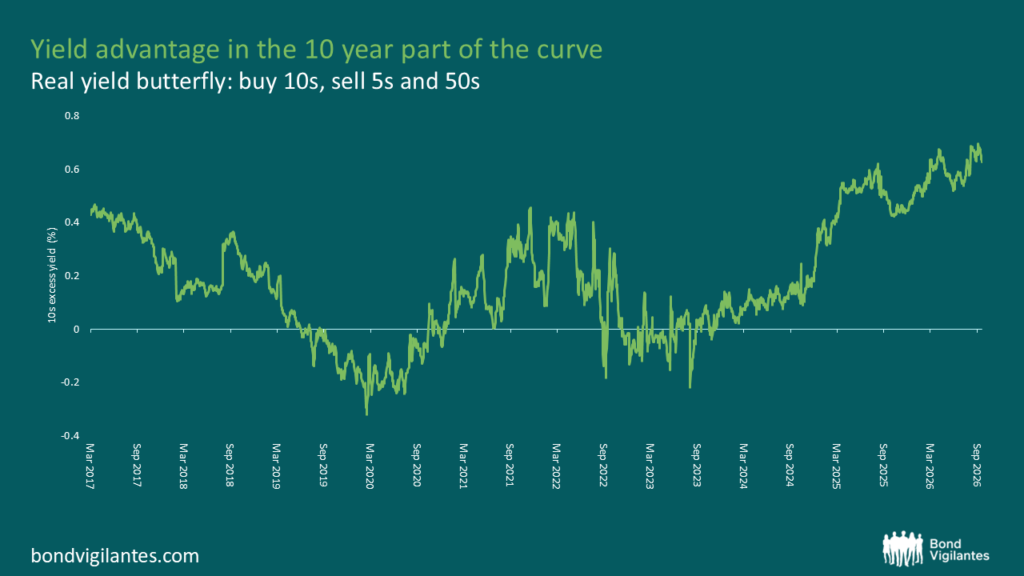
- U.S. Treasury market dynamics and relative‑value opportunity: Treasury yields slipped across the curve, and the Treasury announced a $26 billion 5‑year TIPS issuance, a $25 billion 10‑day bill, a $105 billion 8‑week bill and a $110 billion 4‑week bill. The fresh supply of inflation‑protected securities could pressure TIPS yields higher if demand lags, while the large short‑term bill program may absorb money‑market liquidity. Bond Vigilantes note that the 10‑year index‑linked gilt sector in Europe is now “unusually cheap” relative to 5‑year and 50‑year bonds, offering a record‑level yield advantage of about 1.5% per annum. The combination of U.S. yield retreat and European index‑linked value suggests a cross‑market tilt toward longer‑dated inflation‑linked bonds for total‑return seekers. (Sources: TreasuryDirect; Bond Vigilantes)
- European luxury sector under pressure: Kering shares slid 10% after a sales decline at Gucci, while Volvo Cars plunged up to 30% following a surprise loss and a 2,500‑job cut announcement. Bloomberg reports that Europe’s luxury giants now trade at their lowest valuations in more than a decade, a fallout from disappointing earnings at Hermès and LVMH. The twin blows to consumer‑discretionary names highlight lingering demand weakness and raise concerns about margin compression in a sector that had hoped for a post‑pandemic rebound. Investors may re‑price exposure to luxury equities, favoring companies with stronger balance sheets or diversified revenue streams, and could shift toward defensive assets amid the broader market pull‑back.
- Canadian industrial price surge fuels inflation worries: Statistics Canada released September industrial product price data showing a 2.0% month‑over‑month increase and a 14.5% year‑over‑year rise, while raw‑material prices jumped 4.8% month‑over‑month and 27.0% year‑over‑year. The sharp acceleration points to heightened input‑cost pressures for manufacturers and could feed through to consumer‑price inflation, prompting the Bank of Canada to keep a tighter policy stance. With the next Employment Insurance data due on 18 Nov, analysts will watch labour‑market trends for additional clues on domestic demand. (Source: Statistics Canada)
What to Watch
Key intraday catalysts include the UK budget slated for later today, where Chancellor John Healey’s “do‑no‑harm” approach will be gauged for any fiscal stimulus that could affect gilt yields. The ECB’s September Consumer Expectations Survey will be published, offering fresh insight into household inflation expectations that may influence the central bank’s tightening path. In the United States, the Treasury auction results for the 5‑year TIPS and the large‑scale short‑term bills will reveal demand strength; a weak bid‑to‑cover could push TIPS yields higher. On the corporate side, Volvo’s earnings release (already reported) saw a steep share decline, so market reaction to any guidance update will be critical. Finally, watch whether the oil rally sustains above $110, which would reinforce inflation concerns and test the resilience of the recent Treasury yield retreat. The market’s biggest question remains: will the confluence of higher oil prices and stubborn inflation in Canada and Europe force the Fed, BoE, or BoC to accelerate policy tightening?
