EU Close Digest - 15 Oct 2026
AI-generated close market digest from curated financial newsflow.
Hot PPI at 6.3% YoY fails to lift yields as 10-year Treasury drops to 5.10% and gold surges to $4,175.
US Session Open & European Close
The S&P 500 is trading at 7,724, up 0.07% so far, while the Nasdaq 100 slips 0.61% to 29,768 as chipmakers lead declines. European markets closed mixed: the Euro Stoxx 50 fell 0.35% to 6,169, but the FTSE 100 gained 1.08% to 10,841 and the DAX rose 0.33% to 25,382. The Nikkei 225 tumbled 4.90% overnight to 64,426, extending the global tech rout. Treasury yields reversed lower despite the hot PPI print, with the 10-year down 9.2bp to 5.10% and the 30-year down 10bp to 5.43%, while gold jumped 1.64% to $4,175 and the dollar index slipped 0.41% to 102.12.
Analyst Consensus
- US Inflation: September PPI surged 1.3% month-over-month — the largest gain since March 2022 — and 6.3% year-over-year, well above the 5.5% consensus, per BLS data cited by Bloomberg and CNBC. Goods inflation drove the beat at +2.6% versus +0.8% for services, signaling supply-side and energy pass-through. Yet front-end yields fell and the 10-year dropped 9bp, a divergence Wolfe Research's Stephanie Roth flagged as likely to weigh on bonds and temper rate-cut expectations if subsequent prints corroborate the pipeline signal.
- Tech & AI Credit: Global chip stocks are sinking as AI debt fears intensify, with Nvidia, AMD and Micron leading declines, per CNBC and FT. FT reports investors are dumping data centre bonds as AI infrastructure providers face a "Darwin moment," pushing debt toward stressed territory. Bloomberg notes JPMorgan is weighing a revival of the Qualtrics software debt deal that lenders shunned earlier, with underwriters stuck on over $5bn of loans — a test of returning risk appetite for leveraged software credit.
- Central Bank Divergence: RBNZ's Conway said the October rate decision is "completely open" but the OCR is more likely to rise, citing oil and NZD moves adding short-term inflation pressure, while the RBA's November hike odds fell to ~15% after Australian employment dropped 39,300 and unemployment hit a five-year high of 4.7%, per InvestingLive. ECB's Santos Pereira argued eurozone inflation remains energy-driven and has not broadened, with the recent bond yield rise tied to fiscal concerns not inflation, suggesting the ECB will hold rates.
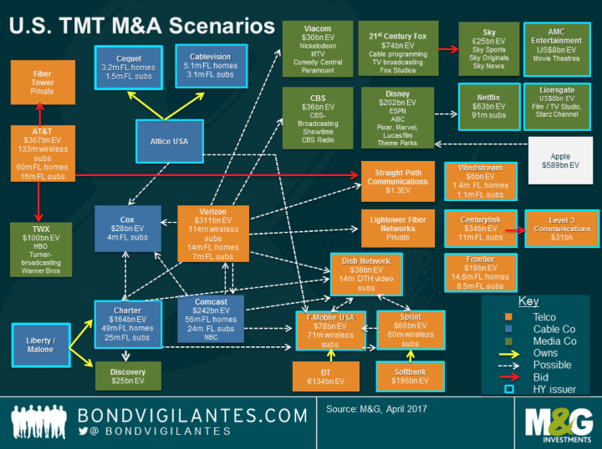
- Credit Stress Signals: Bond Vigilantes highlights the Paramount Skydance-Warner Bros Discovery deal's $12.4bn of new bonds will represent 1.3-2.0%+ of ICE BofA High Yield indices, pressuring spreads. Charter's pro-forma leverage sits in the low 4x range after its $34bn Cox acquisition, with EV multiples compressing from ~10x in 2021. DISH's spectrum sales to AT&T and Starlink illustrate asset monetization amid legacy satellite distress, affecting related high-yield exposures.
- Power Demand Structural Shift: EIA reports PJM, ERCOT and SWPP simultaneously set peak hourly load records this past summer, per Form EIA-930 data. The geographic spread across three distinct market designs and weather regimes points to common demand growth — electrification and data centres — rather than idiosyncratic weather. This supports a bullish medium-term thesis on power demand and capacity scarcity, favoring structural positions in generation and transmission across multiple ISOs.
Tomorrow's Setup
Asia opens with the Nikkei already down 4.9% and Hang Seng -1.03%; TSMC reports today (record quarter, capacity tight per CNBC) and Alcoa, IBKR, JBHT release after the US close. US initial jobless claims came in at 199k vs 200k estimate, continuing claims fell to 1.71m, reinforcing a tight labor market per InvestingLive. The Treasury auctions $110bn 4-week and $105bn 8-week bills tomorrow, adding short-term supply. RBNZ's October decision looms with markets pricing a possible 25bp hike; ECB commentary remains focused on fiscal-driven yield moves. Japan FinMin Katayama urged G20 to monitor markets with urgency, keeping JPY and JGBs sensitive. The open question: whether the PPI-driven inflation scare reasserts itself in yields or the flight-to-safety bid in Treasuries and gold persists as tech credit stress deepens.
