EU Close Digest - 12 Oct 2026
AI-generated close market digest from curated financial newsflow.
Brent crude surged above US$ 106 per barrel after escalating Gulf strikes disrupted geopolitical cease-fire expectations.
US Session Open & European Close
US equities diverged during morning trade as cash Treasury markets remained closed for a federal holiday, draining broader market depth. The S&P 500 hovered near flat, trading down 0.01% at 7,810, while tech-heavy pressure pushed the Nasdaq 100 down 0.63% to 30,688. European bourses closed higher, with the Euro Stoxx 50 advancing 0.31% to 6,193, Germany’s DAX gaining 0.66% to 25,252, and the FTSE 100 closing up 0.81% at 10,637. While European indices drew support from aerospace, defense, and energy sectors, US markets experienced rotational churn under narrow leadership, leaving the CBOE Volatility Index up 2.43% intraday at 15.20. Intraday equity moves confirmed morning strength across European industrials, but thin liquidity left Wall Street struggling to sustain momentum ahead of major bank earnings.
Analyst Consensus
- US Equities: Severe breadth divergence at record highs is leaving broader benchmarks vulnerable to institutional pullbacks. RIA Advisors highlights that while the S&P 500 reached near-record levels at 7,811.51, only three of 11 sector ETFs currently trade above their 50-day moving averages, specifically technology at +5.1%, energy at +3.7%, and healthcare at +1.2%. Evercore points out that a record 140 index members now exhibit negative beta, while semiconductor indices slipped 4.5%. RIA Advisors warns that failure to sustain a break above the 7,818.93 record close could trigger a retreat toward the index’s 50-day moving average at 7,700. In single-stock developments, MarketWatch notes that Microsoft reclaimed a US$ 4tn intraday market capitalization, even as CNBC reports the firm plans to rely more on homegrown AI chips to reduce its reliance on Nvidia and protect margins.
- Energy: Fragile geopolitical developments are pulling commodity benchmarks between cease-fire announcements and escalating infrastructure strikes. While the Financial Times reports that diesel prices slipped following claims of an energy cease-fire agreement between Donald Trump and Vladimir Putin, both CNBC and InvestingLive report immediate breakdowns in the arrangement. President Volodymyr Zelenskyy alleged that Russian strikes targeted power infrastructure in Kharkiv and Kyiv within hours, while Russia cleared 500,000 tons of diesel exports ahead of an International Energy Agency board meeting on 15 October. Concurrently, Bloomberg and InvestingLive report that Houthi strikes on Riyadh’s airport killed 13 people and injured over 300, alongside claims of attacks targeting two Saudi Aramco facilities. The resulting supply anxiety propelled Brent crude up 2.06% intraday to US$ 106.88 per barrel and WTI crude up 1.4% to US$ 92.99 per barrel.
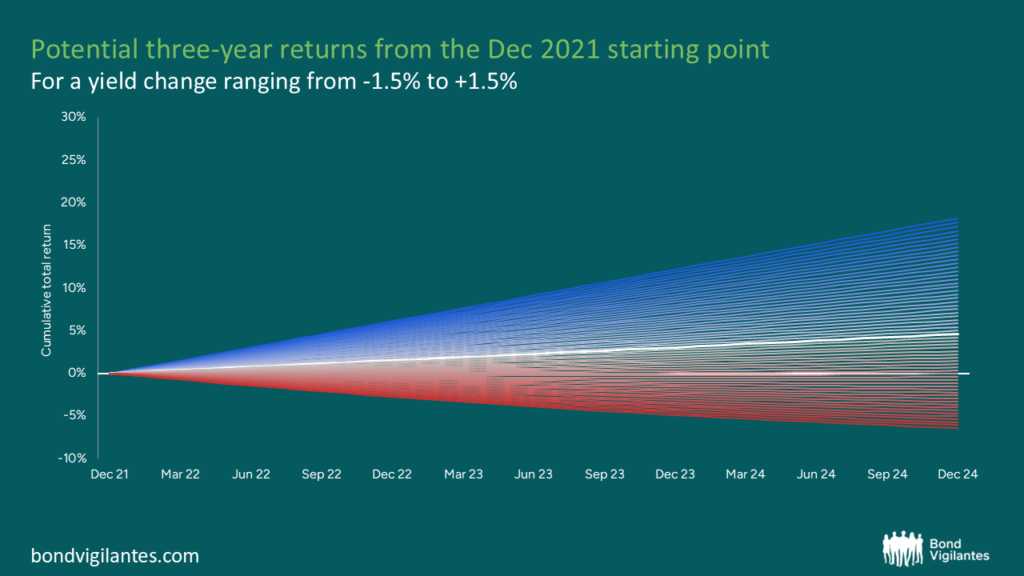
- Fixed Income: Sovereign yields remain pinned near multi-decade highs, shifting institutional focus toward coupon carry rather than capital appreciation. Bond Vigilantes notes that the 10-year US Treasury yield expanded from 1.51% at the start of 2022 to 5.29% by 30 September 2026, delivering an annualized total return of -2.9% over that period. The analysis shows that multi-decade high starting yields provide a substantial income buffer, where even a further rise to 9.06% by June 2031 would yield a positive total return of +9.3% (+1.9% annualized). Bloomberg reports that market strategist Singaravelu places a 10% probability on the 10-year yield touching 6.00% before the new year, which would challenge broader equity discount valuations. Across international debt, the South African Reserve Bank announced it will indefinitely suspend its weekly main repo auction effective 30 October 2026 due to negligible demand under its surplus-liquidity framework.
- Global FX: Asian central banks are intervening aggressively to stem local currency depreciation against a firmer greenback. InvestingLive highlights that the Reserve Bank of India rolled out one of its largest currency-support packages since 2013, implementing a dedicated US dollar window for state oil refiners and adjusting foreign-exchange derivative reserve requirements as the rupee approached 97 per dollar. In mainland China, the People’s Bank of China fixed the USD/CNY reference rate at 6.7313 against market expectations of 6.6977, alongside injecting 50bn yuan via 7-day reverse repos at 1.4%. Goldman Sachs analysts observe that Beijing is carefully managing the speed of appreciation rather than stopping it outright, seeking to shield exporters while stabilizing trade sentiment. The US dollar index traded up 0.29% at 102.51, keeping EUR/USD pressured down 0.42% at 1.1166 and USD/JPY up 0.43% at 158.74.
- Macroeconomic Regimes: Emerging markets are displaying sharp divergences in output momentum and consumer price pressures. In Mexico, INEGI reported that the Indicador Mensual de la Actividad Industrial rose 0.6% month-over-month in August 2026, driven by manufacturing, mining, and utilities, potentially lifting Q3 GDP expectations and tightening spreads on Mexican debt. Conversely, India’s retail inflation accelerated to an 11-month high of 5.54% year-over-year in September, as reported by CNBC and Bloomberg, approaching the ceiling of the Reserve Bank of India’s 2% to 6% target band following its rate increase last week. Meanwhile, the International Monetary Fund warned of acute sovereign bond pressures across advanced economies, even as European Central Bank Governing Council member Christodoulos Patsalides cautioned that elevated rates cannot fully shield economies from supply-side inflationary shocks.
Tomorrow's Setup
Asian trading faces volatile cross-currents overnight following forceful currency defense in India and China, alongside unconfirmed reports of infrastructure damage across Gulf oil hubs. On Tuesday 13 October, institutional attention shifts directly to the opening of US third-quarter corporate earnings, with major financial institutions JPMorgan Chase, Goldman Sachs, Citigroup, Wells Fargo, alongside UnitedHealth and Johnson & Johnson, scheduled to report. Across macro indicators, traders are looking ahead to Wednesday’s US CPI release, where consensus estimates tracked by InvestingLive project headline inflation to rise to 3.7% year-over-year from 3.4%, and core CPI to firm to 2.5% from 2.4%. Key technical levels to watch at the Tuesday equity open include S&P 500 resistance at its record close of 7,818.93, with downside risk anchored at the 50-day moving average of 7,700, while Brent crude tests resistance around US$ 107. The primary open question is whether bank earnings and Wednesday's inflation print will validate narrow equity valuations or trigger an asset reallocation into high-yielding cash and short-duration sovereign paper.
