EU Close Digest - 04 Jun 2026
AI-generated close market digest from curated financial newsflow.
Broadcom’s earnings miss triggered a 3.7% semiconductor sell-off, repricing AI-exposed equities ahead of NVIDIA’s 12 June print.
US Session Open & European Close
US equities opened lower and extended losses into the afternoon, with the S&P 500 shedding 0.4% to 7,540 and the Nasdaq 100 underperforming at -0.8% (30,150). The sell-off was led by semiconductors—SOX down 3.7%—after Broadcom’s revenue guidance missed by 4.5%, confirming Bloomberg’s warning of fragile AI leadership. European markets had closed mixed, with Euro Stoxx 600 +0.7% (6,093) on hopes of ECB cuts, but the US open reversed early gains as tech breadth deteriorated: only 3 of 11 S&P sectors finished green, with energy (+1.2%) and utilities (+0.8%) the sole outperformers. Treasury yields followed the risk-off tone, with the 10-year yield falling 6 bps to 4.40% and the 2s10s curve steepening to -18 bps. The dollar index (DXY) held steady at 99.0, while Brent crude dropped 2.9% to US$ 94.98 on Iran détente hopes.
Analyst Consensus
- Semiconductor fragility: Both Bloomberg and CNBC flagged Broadcom’s earnings miss as a catalyst for sector-wide repricing, with SOX down 3.7% and Micron (-6.2%) leading declines. The thesis is that AI-driven valuations are vulnerable to earnings validation, particularly as Goldman Sachs’ CTA model shows systematic funds reducing net tech exposure by US$ 12.3 bn in the past five sessions. If NVIDIA’s 12 June print fails to re-anchor sentiment, the SOX could test 5,000 support, triggering a 5-7% de-grossing cascade in quant funds. Positioning risk is now asymmetric, with short-covering potential if SOX rebounds above 5,200.
- Divergence: BOJ hike vs. RBA pause: InvestingLive highlights a policy split, with the BOJ poised to hike rates on 16 June (80% market pricing) while the RBA is on hold for June (0% pricing) and only 50% odds of an August move. The BOJ’s move is framed as a credibility-driven step after years of ultra-loose policy, while the RBA’s pause reflects softening Q1 GDP (0.3% QoQ) and easing unit labour costs (3.2% nominal). The divergence implies JGB yields may rise (10Y testing 1.0%) while AUD rates stabilize, driving JPY strength against AUD. However, a geopolitical shock (e.g., Middle East escalation) could force the BOJ to delay, triggering a sharp unwind of JPY longs.
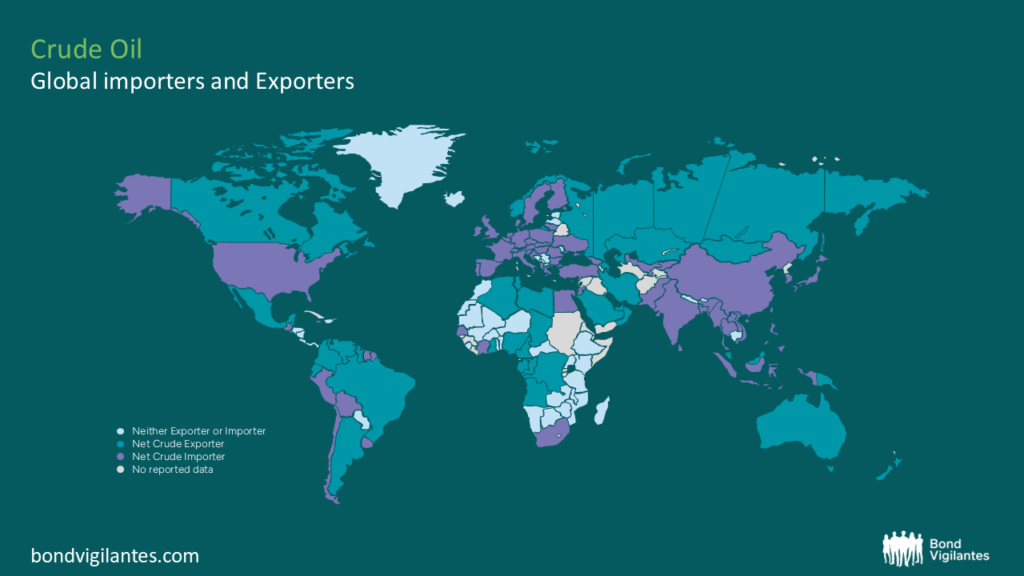
- Cross-asset: Oil’s geopolitical premium unwind: Bond Vigilantes and Bloomberg converge on the thesis that the Iran détente is compressing oil’s risk premium, with Brent falling 2.9% to US$ 94.98 and front-month contracts pricing a 35% probability of a >15% spike within 90 days (Goldman CTA model). The unwind is spilling into rates, with the 10-year Treasury yield down 6 bps to 4.40% and breakevens compressing 5 bps. If the accord holds, the term premium in 5- to 10-year Treasuries could compress another 25-35 bps, steepening the 2s10s curve and rotating flows into rate-sensitive sectors (XHB, IYR). However, crack spreads remain elevated (diesel at US$ 50/bbl), limiting the downside for refiners (VLO, PBF).
- Contrarian: Tokenization as "ETF 2.0": CoinDesk’s Ashenden argues that tokenization is a structural shift akin to the 1990s ETF revolution, with BlackRock’s BUIDL fund (US$ 500 m AUM in 3 months) and JPMorgan’s Onyx platform (US$ 1 bn+ in tokenized deposits) leading adoption. The thesis is that 24/7 trading, fractionalization, and embedded compliance will pressure legacy intermediaries (BNY Mellon, State Street), creating a "tokenization premium" for assets like Ondo Finance’s OUSG (5.1% APY). DTCC’s Project Ion now settles 12% of U.S. equity volume, per their Q1 2026 report, suggesting traditional custody providers face 20-30% fee income declines by 2030.
- Flows: Private credit liquidity crunch: CNBC reports Blackstone’s BCRED fund triggered redemption gates after requests jumped to 10% of NAV, echoing HIMCo’s warning of duration mismatch in private credit. The thesis is that rising cost of capital is forcing a repricing of illiquid assets, with high-yield spreads (HYG) at risk of widening 30-50 bps. Public credit markets may see a freeze in valuations, while direct lending faces rollover risks—particularly for BBB-rated issuers with US$ 200 bn in maturities in 2026-27 (BoC Financial Stability Report).
Tomorrow's Setup
Asia opens with Japan’s Q1 GDP (consensus +0.4% QoQ) and Australia’s May employment report (consensus +30k jobs, unemployment 4.0%). The BOJ’s June hike odds remain at 80%, with JGB 10Y yields targeting 1.0% if the move is confirmed; a delay could trigger a 5% JPY sell-off. In Europe, UK Q1 GDP (consensus +0.6% QoQ) and Eurozone industrial production (consensus -0.3% MoM) will test the ECB’s dovish pivot. US data includes May PPI (consensus +0.2% MoM) and weekly jobless claims (consensus 230k), with NVIDIA’s earnings after the close as the key catalyst for tech sentiment. Positioning is light ahead of the Fed’s June decision (98% priced for no change), but the open question is whether NVIDIA’s print can halt the semiconductor bleed or accelerate the rotation into defensives.
