EU Close Digest - 03 Jun 2026
AI-generated close market digest from curated financial newsflow.
Turkey’s central bank signals 200-300bps hike risk as inflation expectations surge to 42.5%, pressuring TRY and EM assets.
US Session Open & European Close
The US session opened with a defensive tone, confirming the cautious sentiment from the European close as investors digested hawkish signals from emerging-market central banks and persistent geopolitical risks. The S&P 500 slipped 0.43% to 7,577, led by underperformance in rate-sensitive sectors (XLK -0.8%, XHB -1.2%), while the Nasdaq 100 held relatively steady (-0.09% to 30,632) on resilience in mega-cap tech. Breadth was weak, with decliners outpacing advancers by 1.8:1 on the NYSE. The divergence from Europe’s morning session—where the Euro Stoxx 600 closed down 0.78%—reflected a rotation into defensive equities (XLU +0.3%) as US Treasury yields rose (10Y +6.7bps to 4.48%), pressured by stronger-than-expected ADP payrolls (122K vs. 100K consensus) and hawkish commentary from the ECB’s Elderson. Oil (Brent +1.44% to $97.38) and gold (-0.41% to US$ 4,471) reflected a barbell of inflation hedges and safe-haven demand, while BTC/USD (-0.42% to US$ 66,425) remained rangebound despite structural bids from tokenized collateral narratives.
Analyst Consensus
- EM Central Banks: Hawkish Pivot Risks Growth Trade-Offs Both the TCMB and SARB are signaling a prolonged tightening cycle to anchor inflation expectations, with Turkey’s central bank explicitly revising its 2026 year-end inflation forecast to 58.0% (from 36.0%) and warning of "second-round effects" from wage-price spirals. The TCMB’s May survey shows 12-month-ahead inflation expectations at 42.5%, while South Africa’s core inflation remains at 7.8% (vs. 4.5% target). The implication is a structural repricing of EM assets: TRY may test 34.0-35.0 if the TCMB hikes 200-300bps in June, while ZAR bonds (R2030 yield: 11.2%) could reprice +50-70bps on SARB’s hawkish stance. EMFX carry trades (e.g., USD/TRY, USD/ZAR) face unwind risks as real rates compress, with JPMorgan’s GBI-EM VIX underpricing volatility for a regime of sticky inflation. (Sources: TCMB Press Release, BIS Publications, Ashenden Macro Regime Intelligence)
- Divergence: Fed vs. ECB Policy Paths The Fed and ECB are split on inflation persistence, creating a policy divergence trade with material cross-asset implications. Fed’s Williams dismissed concerns about second-round effects, arguing inflation is "not that worrying" and projecting 2% GDP growth, while the ECB’s Elderson warned of "prolonged war" in the Middle East increasing second-round risks, cementing a June hike. Evidence includes US core PCE at 2.8% (April) vs. euro area core HICP at 2.5% (May), but the ECB’s focus on wage growth (Germany’s 5.6% YoY in Q1) contrasts with the Fed’s "stable" job market narrative. The market implication is a widening US-EU rate differential, supporting a EUR/USD rally toward 1.18 and a rotation into EU equities (DAX, CAC) over US peers. Duration-sensitive assets (e.g., US Treasuries) may underperform Bunds, while USD funding costs could rise, pressuring EM carry trades. (Sources: CNBC Economy, InvestingLive Central Banks, Bloomberg Economics)
- Tokenized Collateral: Structural Bid for BTC/ETH Zodia’s Julian Sawyer argues that tokenized Treasuries and repo (e.g., DTCC’s Project Lithium, BlackRock’s BUIDL fund) will force banks to hold BTC and ETH as collateral for intraday liquidity management, creating a multi-year structural bid. Evidence includes JPMorgan’s Onyx repo network (12% of daily volume in tokenized Treasuries) and the Bank of England’s 2026 stress test, which explicitly includes tokenized collateral. Zodia’s model projects $10-15bn in annual BTC/ETH demand by 2027, outpacing ETF inflows and compressing volatility. The cross-asset link is clear: banks’ price-insensitive buying could tighten the correlation between BTC and traditional collateral markets (e.g., repo, MBS), while reducing the premium for physical gold (XAU/USD -0.41% today). (Sources: CoinDesk Markets, BIS Research Papers)
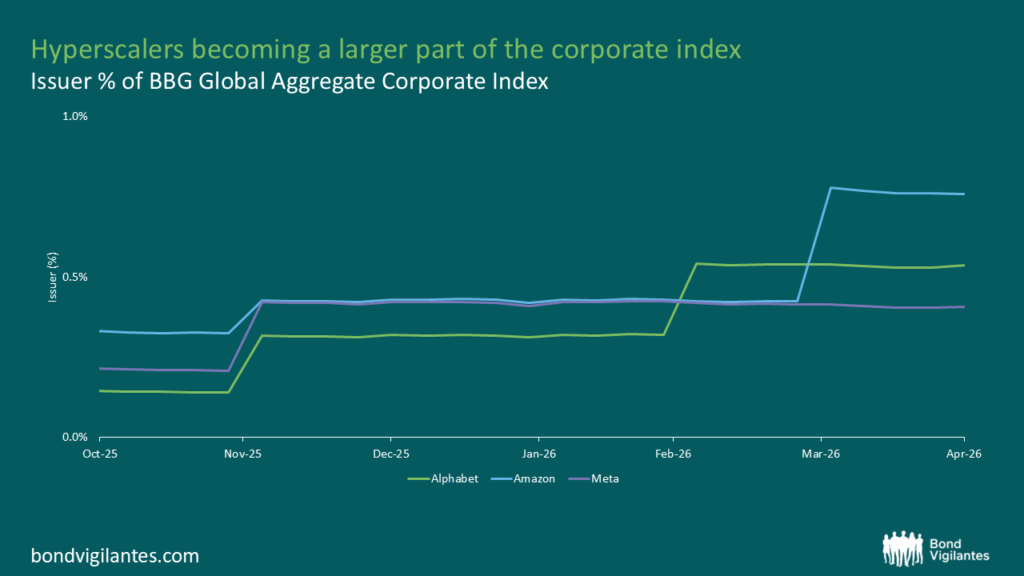
- Contrarian Call: Big Tech Debt as a Valuation Opportunity Bond Vigilantes argues that the surge in Big Tech debt issuance (Alphabet, Amazon, Meta) is a tactical valuation opportunity, not a credit risk story, due to a structural supply-demand dislocation in high-grade credit. Evidence includes their combined EBITDA of $150-200bn, which keeps leverage ratios stable (debt-to-EBITDA well within AAA/Aa thresholds) despite record issuance. The contrarian call is that bond indices are re-weighting toward these names, but portfolio diversification rules cap single-issuer exposure, forcing spreads wider. The implication is a temporary oversupply window offering entry into high-quality paper at spreads 20-40bps above historical norms, with the capex cycle (e.g., AI-driven data centers) extending the supply pressure for 3-5 years. (Source: Bond Vigilantes)
- Geopolitical Stalemate: Oil and Tariffs as Stagflationary Wildcards Bloomberg and CNBC converge on a "stagflationary lite" regime, where energy-driven inflation and trade tariffs create asymmetric policy risks. Evidence includes the USTR’s proposed 10-12.5% duties on economies with partial forced labor prohibitions, and the U.S.-Iran conflict’s stalemate (ceasefire talks stalled, no third-party mediation). The implication is persistent upward pressure on import costs (e.g., textiles, electronics) and oil prices (Brent +1.44% to $97.38), with the Atlanta Fed’s GDPNow at 2.8% Q2 growth but the NY Fed’s underlying inflation gauge (UIG) at 3.1%. Markets may price in higher inflation expectations, supporting commodities (XLE +0.5%) and inflation-linked bonds (TIPS), while rate-sensitive sectors (e.g., utilities, REITs) face valuation compression. (Sources: Bloomberg Economics, CNBC Economy)
Tomorrow's Setup
Asia’s session will be dominated by China’s trade balance (consensus: US$ 70bn surplus, down from US$ 72bn) and Japan’s Q1 GDP revision (consensus: -0.5% q/q, unchanged from preliminary). Positioning is skewed toward a weaker CNY (USDCNY at 7.25, near 2024 highs) on growth concerns, while JPY (USD/JPY at 157.20) faces intervention risk if the BoJ’s tolerance threshold (160.00) is tested. Tomorrow’s US data includes initial jobless claims (consensus: 220K, prior: 229K) and Q1 productivity (consensus: +0.3% q/q, prior: -0.3%), with markets hyper-focused on wage growth signals ahead of Friday’s payrolls (consensus: 185K, prior: 175K). The open question is whether the Fed’s "no obvious direction" stance (Williams) will hold if ADP’s strength is confirmed, or if the ECB’s hawkish pivot (Elderson) forces a repricing of US rate cuts (currently 60% chance of September cut). Watch EUR/USD 1.1600 as the pivot level for divergence trades, and TRY 34.00 for signs of TCMB intervention or capitulation.
