EU Close Digest – 07 May 2026
AI-generated close market digest from curated financial newsflow.
Brent crude slipped to US$ 97.86 a barrel, extending a three‑day decline and pressuring oil‑linked equities.
US Session Open & European Close
The S&P 500 opened marginally higher at 7,373, up 0.10%, while the Nasdaq‑100 added 0.47% to 28,734, reflecting modest risk‑on bias despite a weaker European backdrop. In Europe, the Euro Stoxx 50 fell 0.64% to 5,988, led by defensive sectors as the euro slipped to 1.1769 against the dollar (+0.45%). Breadth was mixed: the NYSE posted 578 new highs versus 63 lows, but the Euro‑zone saw fewer advancing issues, underscoring a divergence between U.S. momentum and European weakness. The U.S. rally was anchored by easing labor‑cost pressures and a modest gain in technology, whereas the European sell‑off was driven by higher yields (U.S. 10‑yr at 4.35%, down 14 bps) and a firmer dollar that weighed on export‑sensitive stocks. No major intraday reversal materialised in the U.S., but sector rotation was evident as energy lagged the broader market while consumer‑discretionary stocks showed relative strength.
Analyst Consensus
- Labor‑cost easing fuels equity buoyancy: Both Neil Sethi and Lance Roberts note that the rally in U.S. equities is underpinned by a genuine slowdown in payroll‑cost inflation rather than earnings surprises. Sethi cites Challenger’s April job‑cut tally down 20.9% YoY to 83.4 K and unit labor‑cost growth easing to 2.3% (vs. 2.5% est.). Roberts adds that the S&P 500 has doubled since the October 2022 lows, driven by real earnings growth. The implication is that valuations can remain elevated while cost‑inflation stays in the 2‑3% band; a reversal would likely trigger a shift toward defensive sectors.
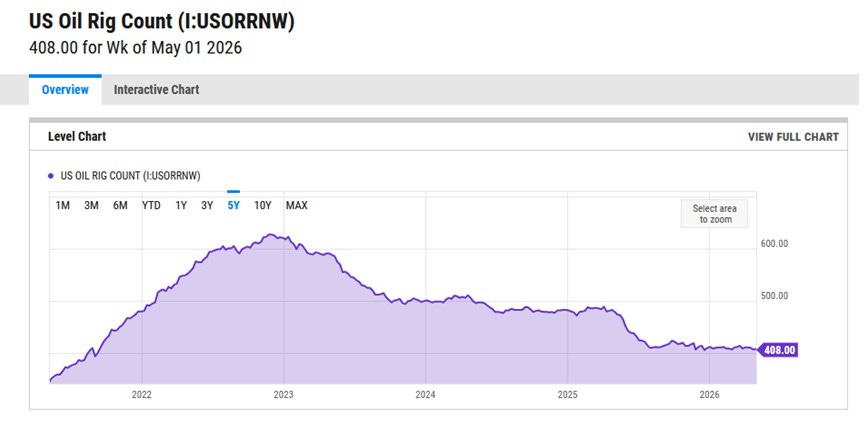
- Energy outlook split on oil price dynamics: Sethi argues that falling crude is pulling the risk‑on framework lower but that commodity‑linked assets are holding ground, implying muted inflation risk and continued support for equities. By contrast, Roberts highlights Diamondback Energy’s ability to boost output without new rigs, suggesting that oil‑price‑linked equities could outperform if producers capture price premiums. The divergence stems from Sethi’s focus on macro‑driven price declines versus Roberts’ micro‑level production flexibility. Investors should weigh both perspectives: a sustained Brent dip may keep yields low, yet firms with strong DUC inventories could still deliver upside.
- Cross‑asset linkages – yields, dollar and credit spreads: The slide in WTI and the accompanying drop in 10‑yr Treasury yields (down 14 bps to 4.35%) have weakened the DXY, now at 98 (-0.17%). Sethi points out that a weaker dollar supports risk assets, including gold (up 1.76% to US$ 4,764) and copper, while also keeping Treasury yields muted. At the same time, his note on China’s mixed sanctions policy suggests a modest “sanctions‑credit” premium for oil‑related credit, potentially widening spreads for firms with Iranian exposure. The combined effect is a generally supportive environment for equities, but with pockets of credit risk in oil‑linked issuers.
- Contrarian view on tech valuation pressure: Roberts warns that the XLK technology ETF is “extremely overbought and stretched,” signalling an imminent sector rotation toward defensive and value stocks such as financials (XLF) and healthcare (XLV). Sethi’s data on tech‑sector layoffs – 33.4 k cuts in April, a 38% MoM rise and the highest YTD total since 2023 – reinforces the narrative of earnings pressure from AI‑driven cost cuts. Together, these points suggest that while the broader market remains risk‑on, tech valuations may face a near‑term correction, and a reallocation into lower‑beta sectors could be prudent.
- Nordic monetary divergence reshapes carry‑trade flows: Sethi highlights Norges Bank’s surprise rate hike to 4.25%, the first Western‑European increase since the Iran‑related war shock, versus the Riksbank’s unchanged 1.75% policy rate. This split is likely to attract carry‑trade inflows into the NOK, lift its yield, and pressure the euro and other low‑yielding currencies. The euro’s modest rise to 1.1769 reflects limited offsetting demand, suggesting that short‑term FX positioning may favor higher‑yielding Nordic assets, with potential spill‑over effects on European equity valuations.
Tomorrow's Setup
Asian markets are expected to open lower after a mixed U.S. close, with the yen at 156.45 and the dollar‑indexed Nikkei likely to test the 31,500‑31,600 range. Key U.S. data includes the May 7 ISM non‑manufacturing index (consensus 53.0) and the Fed’s Beige Book release, which could clarify the stance on further rate adjustments after the recent 10‑yr yield dip. The euro will be watched at the 1.1760‑1.1780 band for signs of continued pressure from Nordic rate differentials. On the commodity side, Brent’s next move will be critical; a break below US$ 96 could deepen the sell‑off in energy stocks, while a rebound above US$ 98 may revive oil‑linked equities. The market’s primary question heading into tomorrow is whether the labor‑cost easing narrative will hold, allowing equities to stay elevated, or if emerging credit‑risk concerns around Iranian‑linked oil exposure will reignite risk‑off sentiment.
